Solar makes sense when the numbers match the site.
Pakistan has strong sunlight, rising electricity costs, and real backup needs. The right system turns those conditions into a practical long-term energy plan.
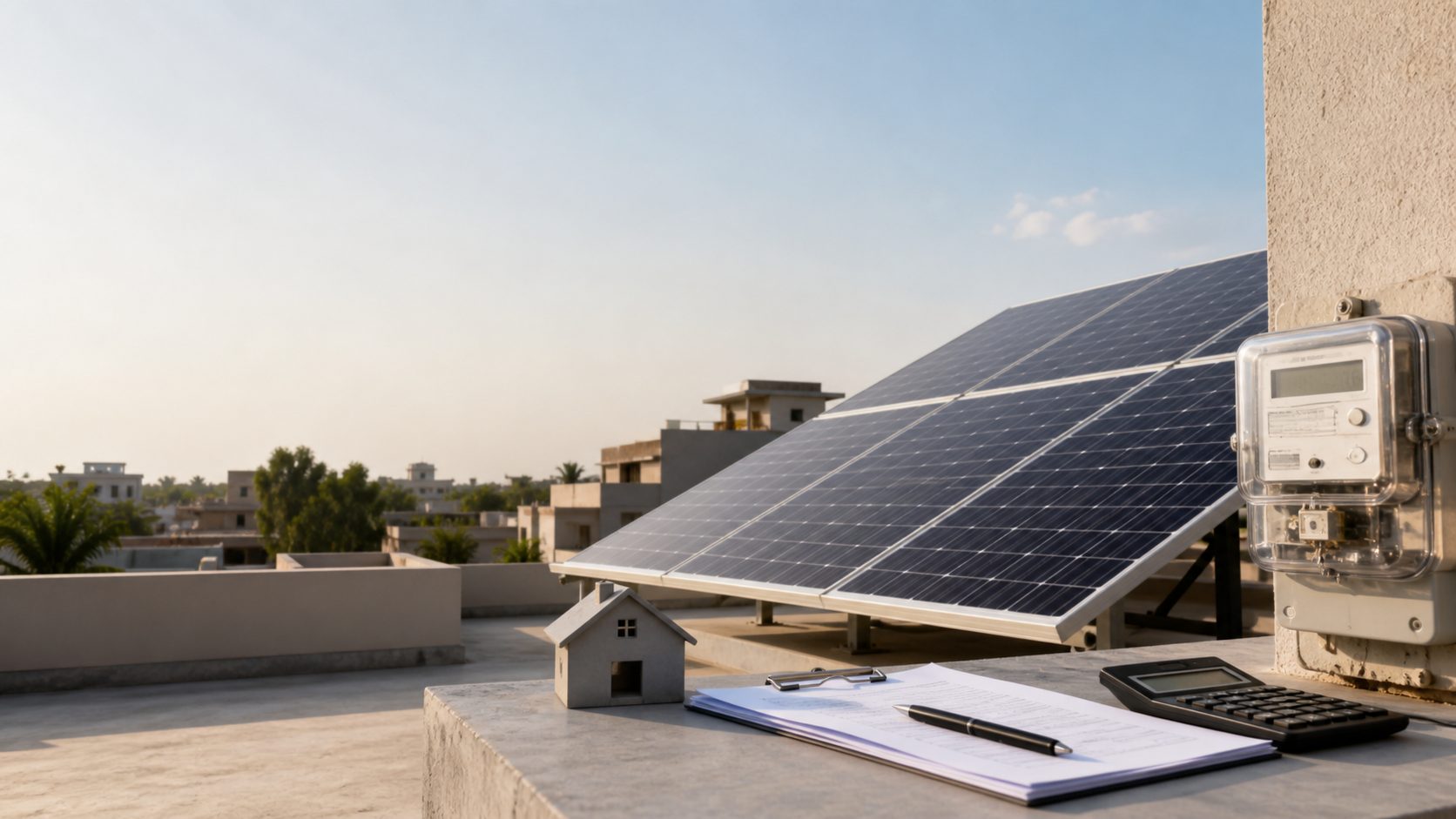

The decision is site-specific
Shade, sanctioned load, tariff, usage timing, and backup scope decide the final payback.
Three forces make solar worth evaluating.
-
High daytime energy demand
Homes, shops, offices, and factories often use meaningful load while the sun is available.
-
Bill pressure
Solar can reduce grid purchases when system size is matched to real consumption.
-
Backup planning
Hybrid systems and batteries can protect priority loads when outages matter.
Quick production ranges for early planning.
These ranges are only a starting point. A transparent savings check connects bill, roof, and tariff inputs before Nano Power validates shade, system losses, and usage pattern.
Check your savings3 kW
4,200-5,700 kWh/year
small home load
5 kW
7,000-9,500 kWh/year
larger home use
10 kW
14,000-19,000 kWh/year
villa or small business
Move from generic payback to your actual payback.
Use the savings check to prepare for a survey conversation about system target, backup scope, equipment, and a reliable installation tied to your site.